Choosing the right FPV frame geometry is not just a technical choice—it determines how the drone will fly, how it will respond to controls, and how clear the image from the camera will be. In this article, we will clearly explain the differences between True X, Squished X, and Deadcat and advise you on when each one makes sense.
Why frame geometry really matters
Frame geometry describes the arrangement of motors and arms relative to the center of the drone. It affects:
- thrust balance on all axes (pitch/roll/yaw),
- propeller visibility in the shot (FPV and HD camera),
- the response to control and the overall "feel" of flight,
- how easy the drone is to tune and how it behaves at higher speeds.
Quick comparison: True X vs Squished X vs Deadcat
| Geometry type | Camera without propellers | Flying feel | Ideal for |
|---|---|---|---|
| True X | ⚠️ Propellers often visible | Symmetrical, precise, balanced | Racing, freestyle |
| Squished X | ⚠️ partially / depends on the camera | quicker response, "faster" feel | freestyle, race |
| Deadcat | ✅ typically clear shot | calmer, more "cinematic" | cinewhoop, video |
Note: Propeller visibility also depends on the FOV width, camera position, frame size, and mount used.
True X - symmetrical classic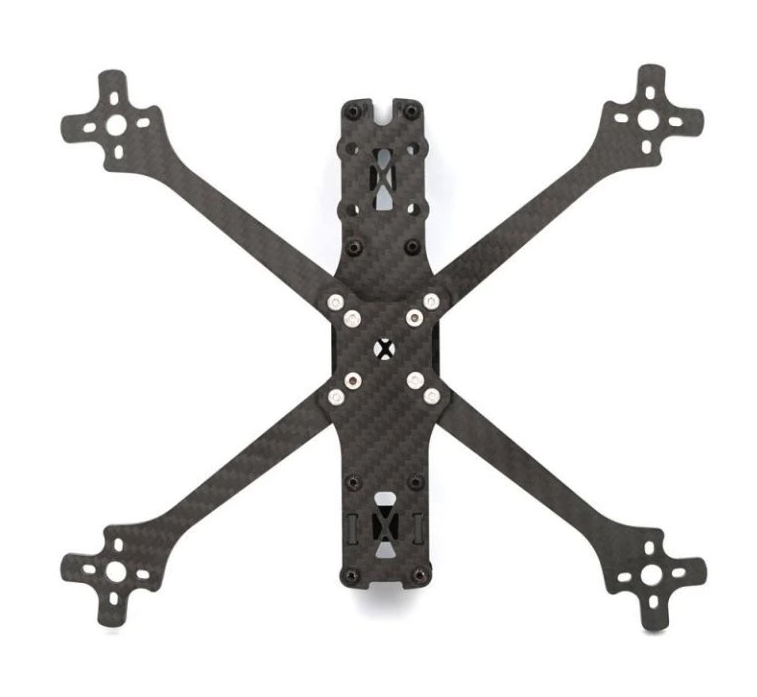
True X means that all four arms are the same length and the motors form a perfect "X". The result is symmetrical thrust and very consistent response during pitch/roll maneuvers.
Advantages
- Maximum symmetry = precise and predictable response.
- Often easier tuning due to balanced force distribution.
- Great choice for racing and aggressive freestyle.
Disadvantages
- You will often see the propellers in the shot (FPV and HD), especially at lower camera angles.
- This is not always ideal for purely "cinematic" video.
Suitable for: racing, freestyle, pilots who want symmetry and precision.
Squished X - a smart compromise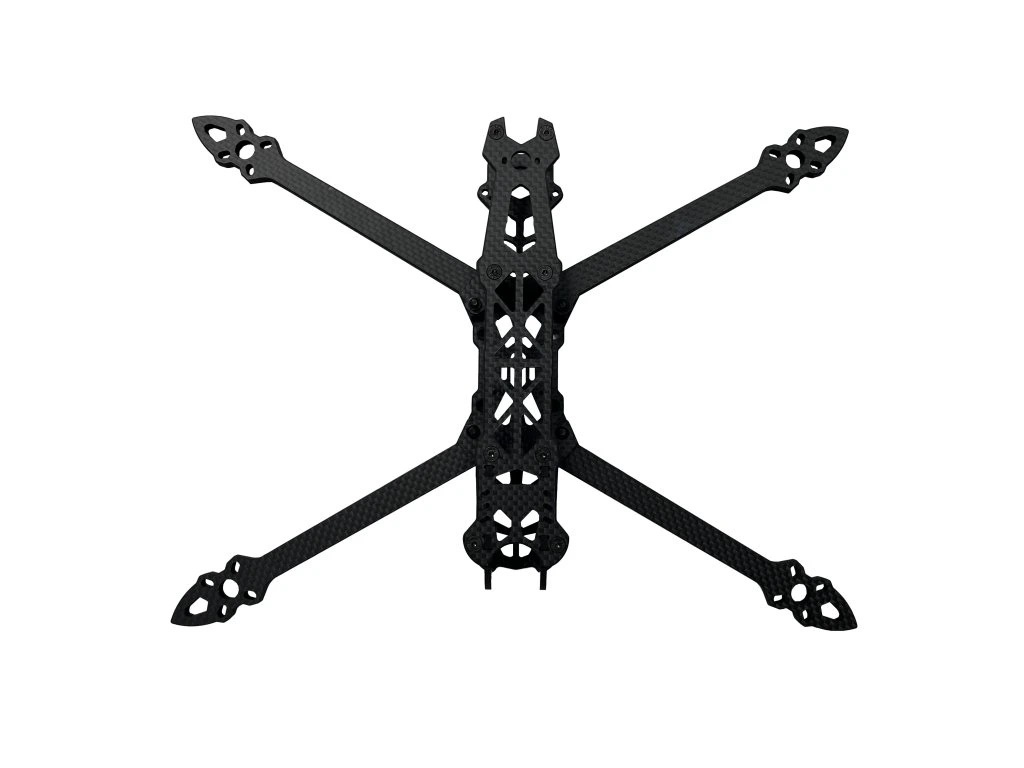
Squished X is a "flattened" version of X geometry - the frame is shorter in the front-to-back axis, while the width remains similar. In practice, this often means quicker responses and faster transitions in maneuvers.
Advantages
- More agile response (especially in fast flips and changes of direction).
- The more compact shape can feel more stable at higher speeds.
- Often a good compromise for freestyle pilots who want a "lively" feel.
Disadvantages
- The propeller may still be visible in the shot - depending on the setup.
- It is not primarily a "video-first" geometry.
Suitable for: freestyle, racing (depending on preference), universal builds.
Deadcat - clean video without propellers
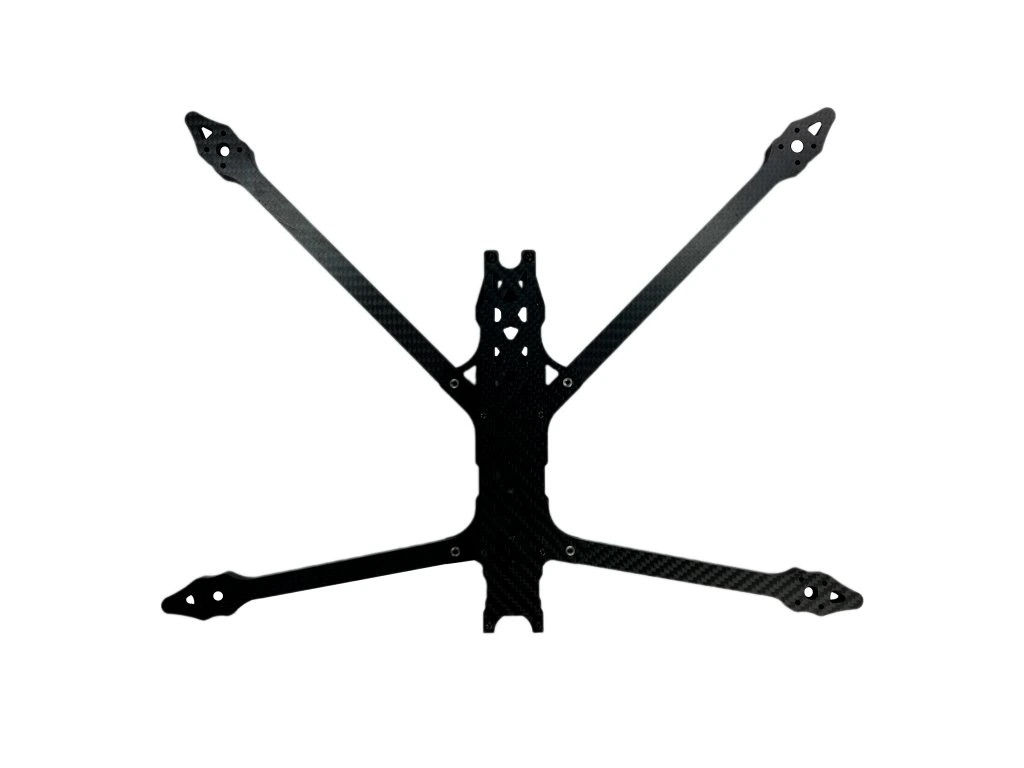
Deadcat geometry (often used in cinewhoops and camera frames) shifts the front motors more to the sides so that the propellers are not in the shot. This is a huge advantage for those who want clean FPV/HD video without distracting props.
Advantages
- Clean footage without propellers — ideal for GoPro, DJI O3, and cinematic style.
- Often more space in the front for a camera, filters, or various mounts.
- Excellent for smooth flights and cinematic camera work.
Disadvantages
- The geometry is less symmetrical, so flight performance may be less race precise.
- Sometimes you need to pay more attention to battery placement and center of gravity.
Suitable for: cinewhoop, filming, content creation, clean FPV/HD shots.
How to choose geometry based on flying style
- 🎥 Cinematic / GoPro / DJI O3: Deadcat
- 🕹 Freestyle: Squished X or True X (depending on preference)
- 🏁 Race: True X
- 🧑🚀 Beginner: Deadcat or Squished X (often more pleasant and forgiving)
Summary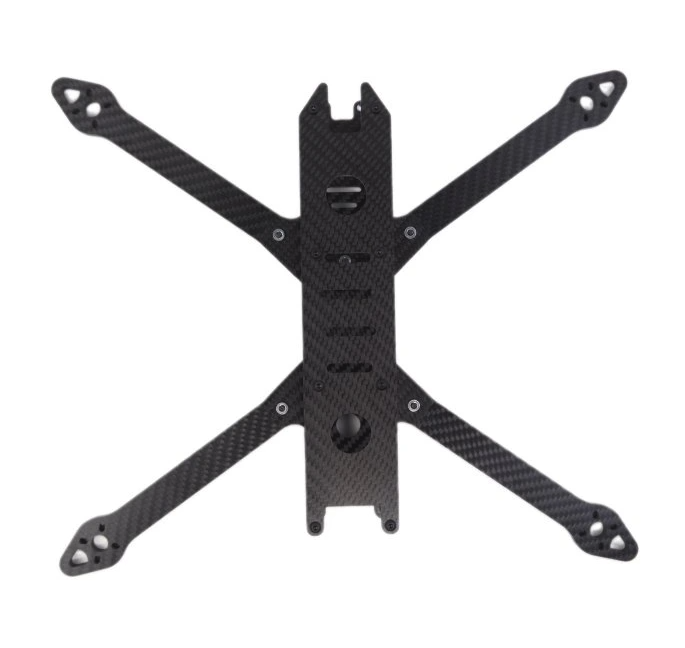
- True X - most symmetry, most precision, often best for racing and aggressive freestyle.
- Squished X - a compromise choice, agile and versatile feel.
- Deadcat - clean video without propellers, ideal for cinewhoop and camera builds.
Frame geometry is not a detail - it affects your flying style and the quality of your shots. If you are unsure what to choose, write to us and we will recommend a frame based on your use.
Need advice?
Write to us and tell us what style of flying you want, what camera you use (GoPro / DJI O3 / analog), and what size drone you are building. We will be happy to recommend the appropriate frame geometry and specific components.